Saturday, December 3, 2011

Oxane


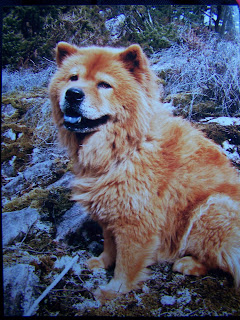
Oxane 1998~2011


Saturday, November 19, 2011

Misakiguchi


We are finally getting some real autumn weather, although if it is often closer to +25°C rather than the +5°C that I would much prefer. But it being so hot and sunny, it is a perfect occasion to go to the beach, and of course what better place to go than Misakiguchi?


I had hoped there might be some autumn colours, but there are very few cherry trees there, and the tree leaves were either green, brown, or fallen.
However, I was delighted to find that about half the cabbage fields now host the large white 'daikon' radish. This doesn't change the flat green leafy look, but it does drastically cut down on the brassica smell. And less brassica can be nothing but positive.


I have known for quite some time about a hiking coursethat runs close to the beach I usually go to, and so decided to try it out. It runs from the brassica fields down into a small village with a small temple decorated with violent pink plastic lanterns and violent blue porta-potties, for some obscure reason.
Beyond this, the path ran along a stange abandonned port/canal system, and old abandonned fishing shacks. It was all quite odd, as although the docks were overgrown with grasses and weeds, it didn't look as if it had ever really been used as a port.


The map indicated a difficult passage right after that, and they weren't joking! Luckily, I had checked that it would be close to low tide, and only had to wait 20 minutes till the water got low enough to let me pass.


After the rather disappointing start to the walk, I was amazed at the little bit of paradise on the other side of that little promontory.


The hills were capped with autumn grasses, pampas grasses and many small yellow and blue flowers. The bushes and trees were bend and knarled by the wind till they perfectly fit the shape of the hill. The rains we had had earlier in the week had started little springs drizzling out from under the grass and down to the sea. And, from the top of the hills, basking in the sun and cool sea breeze, you had a splendid view out over Sagami Bay, dotted with the white sails of everyone else out for a day in the sun.


And people were not the only people out and about, as every tidal pool was a scurrying pool of life: crabs, small bottom-feeding fish, and hundreds of hermit crabs. It was moving time in the hermit crab population, and it appears they have a bit of a housing shortage problem; there often still being live snails (with their doors firmly held shut) occupying the shells the crabs were trying to move into.


On a more peaceful scale, there were also numerous anemones out feeding in the by now incomming tide, surrounded by unmoving chitons. I assume they do move, somtime, but have yet to experience such a phenomenon.


Just one more reason to come back again, although admittedly, reasons to go to such a beautiful place are never very far away. But I think next time I'll pass on the weird abandonned port, the pink lanterns and the porta-potties.

Saturday, November 12, 2011

robots in Tokyo


This week-end, there was the International Robot Exhibition in Odaiba.


Although I was expecting it to be crowded, I was surprised at how many artists (complete with canvases, easels, etc...) all seemed to be going to see it. All was explained when we got into what looks like an airport concord, and it turned out Hall 1 was hosting an exposition on design, and the robots were in Hall 2! All the artists duly went in to hall 1, as did all the young girls, and all the younger men, and, ALL the women, ...
Leaving me with a load of mid-age men in business suits. That's not much of a problem, but the lady at the ticket counter asking me if I was sure I hadn't gotten the wrong hall was just one layer too much!

Once in, however, I had lots of fun. They had lots of industrial machines, as well as all the medical aid things, and a few humanoid ones as well, of course. They didn't have Honda's Asimo, unfortunately. It seems weird, but I think my favorite one was a box-unfolding-taping robot.


What they did have were some works of art (he got the wrong expo hall too), made out og cogs and ball bearings and bolts and stuff. The scupltures were amazing, both the science-fiction type ones, as the (no less science-fiction type) trilobites.


After going around the expo twice, I took the oportunity of being in a different part of Odaiba to take a walk around. I never knew it was so big!


Unfortunately, so are the buildings in Tokyo, quite hiding Mt Fuji, which could be seen crystal clear from the train on the way up to Tokyo.

Monday, October 10, 2011

Isumi line


Next train line on my treck across Chiba was the Isumi line, another small one-car collector's train line.


And for some, as yet unexplained, reason, this line runs under the sign of Moomins.


The Moomin headquarters are at Kuniyoshi, but along the whole train line it is possibe to see small Moomin houses and characters, fishing at the side of small streams, of sitting around camp fires.


As that was where my hotel was, I took the opportunity to wander around Kuniyoshi a bit. It is a small city, largely based on rice production,

A self service rice-cleaning booth.

but with some ongoing road constructions and house expansions.


I was instructed, at Kuniyoshi station, that they were having a summer festival in Ootaki, a village on the opposite side of where I had planned to go. But when the small one-car train bound for Ootaki arrived, packed full of people like a morning train in Tokyo, I decided to stick to my plans and head on to Oohara, to see the beach!


Oohara is a very old-style japanese city, without any high-rise buildings, based largely on fishing.


There are 2 very nice temples in the city itself, one a rather common wood and plaster construction.


The second, a beautiful wooden, thatched-rooved temple was build on the side of a small hill overlooking a small lake. The lake, filled with water lilies and what might have been redhead ducks also had a small little red wooden bridge across to another small temple building.

Climbing up the hill behind the temple, one could see the famous Oohara temple bell, taken to the United States after the wall, but kindly returned to them by Duluth some years later. This is really just trivia, as the bell was of quite ordinary size and disposition.


Although I've seen from the maps that the northern shore of Oohara is a wide beach, famous for surfing and such, the southern coast is lined with sheer limestone cliffs, interspersed with small coves. On the last cliff before the city port, a small shrine has been built, to protect those going off to sea. They had a large anchor in lieu of statues near the shrine, and many small recesses filled with fox statuettes, a diety known for cunning and mischief.


As I got my first good look at the Pacific Ocean, these protections seemed rfectly in order, as it could only be described as brooding. The sky was a dark grey, low over the water, and the waves were quite high, clearly delimitating the 'inside' and 'outside' of the port breakwater.


I had time to tour the little hill on which the shrine was built before the rain hit, and then just waited it out, as were the fishermen on the wharves. 'cue for promoting how great my new raincoat is'


Although it never actually stopped raining, it did settle down into an acceptable drizzle, Turning the cliffs into a mozaic of sun and shade.


Oohara is still about 2 hours from Tokyo, and another hour and a half home to Oppama, so I did not feel I had the time to explore further along the southern shore of Oohara, much to my regret. That will definitely be on my list of further trips, though, as it seemed an absolutely beautiful place to go walking. Preferably not in the rain, of course.